
Sicilian-style fava beans
in Sicilian:
Favi siciliani
Sicilian-style fava beans are a simple yet wonderfully flavourful side dish. Our recipe calls for just five ingredients, most of which – apart from the beans themselves – you’re likely to already have in your kitchen.
All you need is an onion, water, a splash of olive oil and some salt. Together with the fava beans, that’s everything required to prepare our Sicilian-style recipe. Broad beans—known locally as favi or fava—are a staple in many island households and are enjoyed in a wide variety of dishes.
Fava beans and death rituals
The special significance of the fava bean lies in its long history: since antiquity, it has been closely associated with funerary rites. In ancient Rome already, it played a central role in rituals for the dead and was considered a traditional food on All Souls’ Day.
Earlier on, the Greeks had already used them for similar purposes. During the month of Anthesterion, large quantities were boiled as offerings to deities such as Dionysus and Hermes, made on behalf of the souls of the dead. These ceremonies were known as Chytroi, named after the vessels in which the beans were prepared.
One explanation for this symbolic role lies in the plant’s blossom: white with black speckles, whose shape resembles the Greek letter tau – a reference to Thanatos, death. Even priests of Zeus were forbidden to eat or even look at them.
Fava beans also played a role in funerals: they were scattered over coffins or distributed during processions. The philosopher Pythagoras even prohibited his followers from eating them – likely for health reasons, although legends tell a different story.
The tradition of eating beans on All Souls’ Day has survived through the centuries. At the monastery of Cluny, for instance, monks were given an extra portion on this day to sustain them during long hours of prayer.
Even today, Italy still preserves a wide range of traditional dishes and sweets, including variations such as our Sicilian-style fava beans, which are prepared and enjoyed on this occasion. Particularly prized are fava beans from places like Leonforte, Modica, Paceco, Resuttano and Villarosa – a culinary heritage rooted in deep symbolic meaning.
Sicilian-style fava beans - eatlovesicily.com
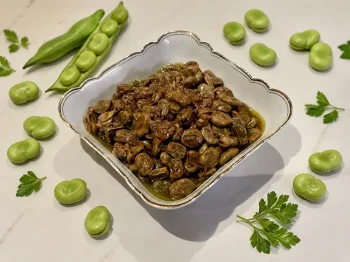
- Prep Time10 min
- Cook Time1 hr 35 min
- Total Time1 hr 45 min
- Yield4 side plates
- Serving Size4 servings
Ingredients
- 1 white onion
- 1.5 kg fava beans (in pods)
- 1–1.5 L water
- 2 tbsp olive oil
- salt to taste
Products from our shop
Instructions
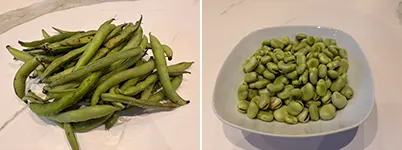
First, the beans need to be removed from their pods. To do this, snap off the tip of the pod and pull down the tough string along the side. The beans can then be easily taken out.
From our initial 1.5 kg of fava beans in pods, this yields around 450 g of shelled beans, which we then use to prepare our Sicilian-style recipe.
Next, peel and finely chop the onion. Heat about 3 tablespoons of olive oil in a saucepan or, alternatively, a deep frying pan, then gently sauté the onion until soft and fragrant.
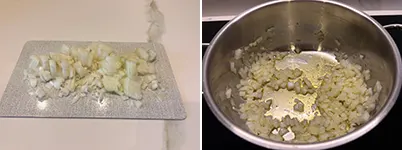
Once the onions turn translucent, add the fava beans and sauté them for another 4–5 minutes. Season with a pinch of salt and stir occasionally.
Then pour in enough water to fully cover the beans. Simmer the Sicilian-style fava beans over medium heat for about 80–90 minutes (in our case level 5 out of 9). Keep the lid of the pot slightly ajar during cooking. Check the texture of the beans from time to time.
Tip: Depending on the consistency you’re aiming for, you can add a little more water or olive oil during cooking while the beans are softening. However, especially with the oil, it’s important not to add it too late, as the dish could otherwise become overly olive-forward in flavour.
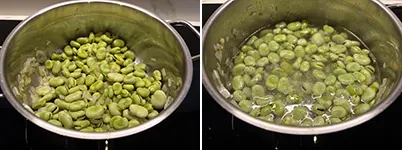
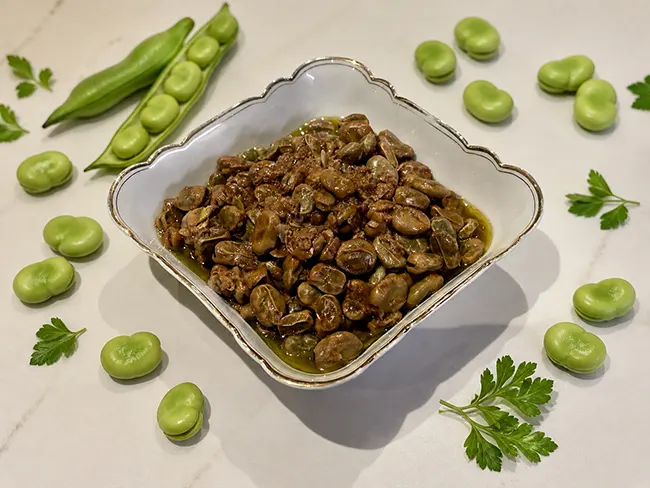
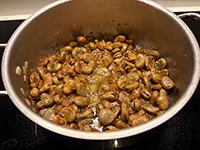
The Sicilian-style fava beans are ready once they have turned a light brown colour and are tender. There should still be some cooking liquid left in the pot.
If you enjoy soaking up the sauce with bread, it’s best to leave a bit more liquid. If you prefer to serve the dish as a side, allow it to reduce slightly so less liquid remains at the end. Buon appetito!
Tip: In our online shop you’ll find not only coffee, spices and chocolate, but also a selection of wines from Sicily. You might just discover something that suits your taste!