

Vegetables in Detail
Here you will find an overview of the vegetables we use in our recipes.
We will gradually expand this overview. Enjoy reading!
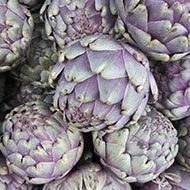
Artichokes
Season: October to May. Artichokes originate from the Mediterranean region. Today, Italy is the largest producer of artichokes. Although artichokes are available year-round, you should enjoy them during the main harvest season, as this is when their flavour is simply at its best.
Tip: To determine how fresh artichokes are, it is worth picking them up. They should feel heavy in your hand and firm and full. In addition, the stem of a fresh artichoke must not be dried out.
Storage: It is best to prepare artichokes on the day you buy them. If this is not possible, you can store them for a few days in the vegetable drawer of the refrigerator. To do so, wrap the artichokes in a damp cloth. Artichokes keep longer the longer and juicier the stem is, as it supplies the artichoke with water and nutrients.
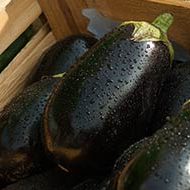
Eggplants
Season: May to October. In the Middle Ages, the eggplant reached Europe thanks to the Arabs, who discovered it in India and China. Italy is now one of the world’s largest eggplant producers. In Sicily alone, one third of the entire national production is grown.
Tip: Eggplant is bitter—therefore we recommend cutting it into small cubes, sprinkling it with salt, and leaving it in a sieve for at least one hour. The water is gradually drawn out of the eggplant and the bitterness decreases. Now it can finally go into the pan!
Storage: Simply place the eggplants in a cool, dark, and dry place. In winter, you can slice them and preserve them in olive oil or vinegar.
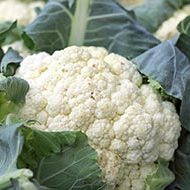
Cauliflower
Season: June to October. Cauliflower was brought to Europe during the Crusades and has been cultivated throughout Europe ever since. Cauliflower can be eaten raw or cooked. In both forms it has a mild flavour and is easy to digest. Cauliflower is also rich in vitamin C and minerals.
Tip: You can recognise fresh cauliflower by its tightly closed head and the pleasantly delicate scent of the stalk. Freshness can also be determined by juicy, green leaves.
Storage: Cauliflower can be stored for a few days in the vegetable drawer of the refrigerator. It is best to remove the leaves and trim the stalk cleanly.
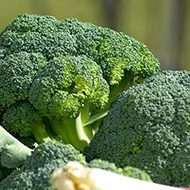
Broccoli
Season: October to April. Broccoli belongs to the cabbage family, such as white cabbage, savoy cabbage, black cabbage and Brussels sprouts. Typical of broccoli are the light-green heads with small side shoots, which in Italian are called “broccoletti”.
Tip: Broccoli is no longer fresh as soon as the green colour of the florets takes on a yellowish tinge. So do not store it for too long!
Storage: It is best stored in the refrigerator, as it is very sensitive to light and heat!
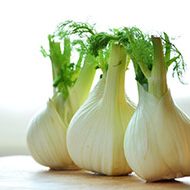
Fennel
Season: October to May. Originally from the Near East, fennel reached the Mediterranean basin in the late Middle Ages, where it found the ideal area for development and spread.
Tip: In addition to being eaten raw in salads, fennel can also be used as a simple, light side dish: whether boiled or baked does not matter—it goes well with many main courses. It can be stored for a few days, but tastes best fresh.
Storage: Fennel bulbs are best stored at 0 to 5°C, for example in the vegetable drawer of the refrigerator.
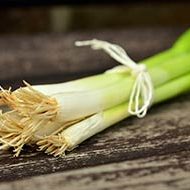
Spring onions
Season: May to October. Like the onion, the spring onion is also well known in Mediterranean cuisine. Its sweeter flavour makes it suitable for certain recipes.
Tip: Peeling without tears?
- Briefly hold the onion and the knife under running water to prevent the sulphur compounds from reaching your face while cutting.
- Alternatively, store the onions in the refrigerator for one hour before cutting.
Storage: Simply place them in a cool, dark, and dry place.
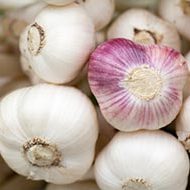
Garlic
Season: April to November. Also available dried all year round.
Tip: For a less intense flavour, we recommend removing the small green sprout inside.
Storage: It is not necessary to store it in the refrigerator. Instead, it is sufficient to simply place it in a cool, dark, and dry place.
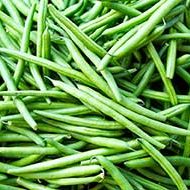
Green beans
Season: May to September.
Tip: When buying, you should pay attention to the degree of ripeness! If the pod breaks when you bend it, then it is the right time to buy or harvest it.
Storage: It is not necessary to store them in the refrigerator. Simply store them in a dark, dry place.
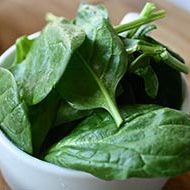
Spinach
Season: October to April.
Tip: Do not leave spinach sitting directly in water (e.g. in a bowl). Instead, it should only be cleaned with a little water if you want to preserve the nutrients. You can then put the dripping-wet leaves into a cooking pot. It is also recommended to eat it raw in a salad.
Storage: It is best stored in the refrigerator. Spinach does not like temperatures above 25°C!
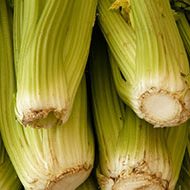
Celery
Season: January to November. Celery is considered a native product of the Mediterranean region: it developed there in antiquity and then spread to other continents. In the Middle Ages, it was even used as a natural antidepressant. The seeds are rich in nutrients with a wide range of minerals (calcium, magnesium, phosphorus, potassium, iron, and zinc), proteins, fibre, and unsaturated fats. Celery is also known for its good diuretic and detoxifying properties.
Tip: You can store celery for around eight weeks by cutting the stalks about ten centimetres above the first leaf branches, wrapping it in newspaper up to the heart, and covering the roots in a box of damp sand.
Storage: Celery keeps for around four weeks in the vegetable drawer of the refrigerator.
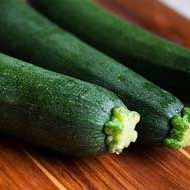
Zucchini
Season: From June to mid-October.
Tip: Zucchini, which can be eaten both raw in salads and grilled, are also suitable as a side dish for meat or for more complex dishes such as risotto.
Storage: You can store them in the refrigerator for around 4–5 days. Beforehand, simply wash them and dry them well.
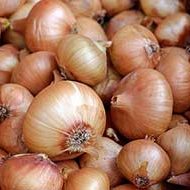
Onions
Season: March to December. Nevertheless, onions are with us all year round thanks to the possibility of growing them in different seasons and storing them for a long time.
Tip: Peeling without tears?
- Briefly hold the onion and the knife under running water to prevent the sulphur compounds from reaching your face while cutting.
- Alternatively, store the onions in the refrigerator for one hour before cutting.
Storage: Simply place the onions in a cool, dark, and dry place.